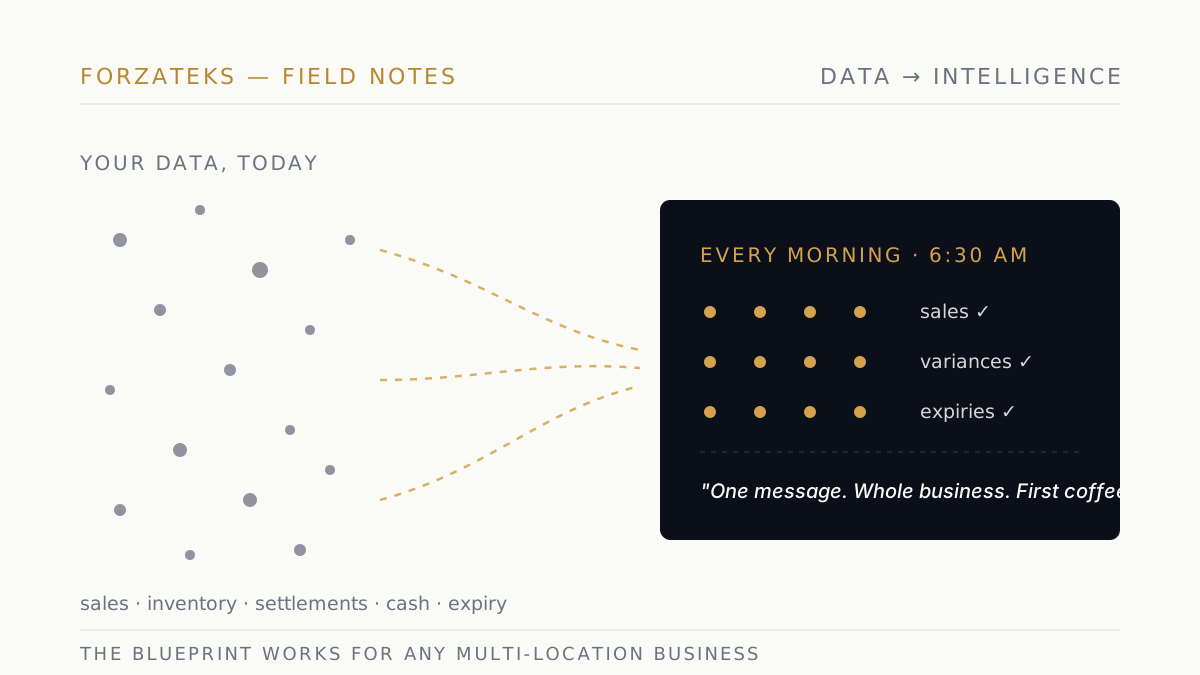
Every pitch deck says the same thing: AI will transform your business. Almost none of them show you what that means on a Tuesday morning.
So let me show you. What follows is the actual shape of a data intelligence solution we designed at Forzateks for a multi-location food trading business in the UAE — one warehouse, ten retail stores, forty-plus consignment kiosks inside host supermarkets. I’ve removed the client specifics, but the design is real. And here’s the thing I want you to hold onto while reading: the example is food trading, but the blueprint applies to almost any business with more than one location, more than one system, and more data than anyone is actually reading.
The problem isn’t effort. It’s blindness.
This business generates thousands of data points a day — sales, inventory movements, supplier orders, expiry dates, cash transactions. Almost none of it gets read back to the owner in a way that helps tomorrow morning’s decisions. Sound familiar? The specific blind spots:
- The kiosks inside host supermarkets settle once a month. That means the largest selling network in the business runs with a 30-day visibility lag — for perishable food.
- Stock expires before it sells, and nobody finds out until month-end counts.
- Cash variances accumulate quietly and are nearly impossible to investigate weeks later.
- Some locations look great on revenue and quietly lose money on margin and waste.
- The best customer and the worst customer get identical pricing and credit terms.
- Any question that should take seconds takes days, because someone has to assemble the answer by hand.
None of this happens because people aren’t working hard. It happens because the business outgrew the manual systems that built it. The fix isn’t more people — it’s a layer of intelligence on top of the systems already there.
Two mornings
Today: you arrive at the office. Accounts is still pulling reports. Managers are emailing Excel files in different formats. You ask “how did we do yesterday?” and wait for a callback. By 11 AM you have a partial picture. By the time you decide anything, the day is half over.
After: it’s 6:30 AM and your phone gets one WhatsApp message. Yesterday’s total sales. Your top and bottom three locations. Two stores flagged for cash variance. Six product batches expiring within seven days, with recommended actions. One anomaly the system thinks you should look at. You finish your first coffee knowing more about your business than you used to know by month-end — and nobody on your team lifted a finger to produce it.
That’s the whole pitch, honestly. Everything else is how.
The four layers
We design these systems in layers, each one valuable on its own:
- Data foundation. All the scattered data — the ERP, host settlement reports, spreadsheets — flows into one organised warehouse every night. One source of truth. (This is the unglamorous part everyone wants to skip, and it’s the part that makes everything else possible.)
- Daily operations. Automated reports at 6:30 AM. Live dashboards per location, product, and KPI. The manual morning-report cycle disappears entirely.
- Business intelligence. Customer scoring, demand forecasting, expiry alerts, cash variance tracking, anomaly detection. Raw data becomes proactive decisions.
- AI layer. An internal assistant that knows the business. Ask “which locations are losing margin this month?” in plain English and get an answer with charts in seconds. WhatsApp Q&A for managers. A weekly executive summary written by the system every Monday.
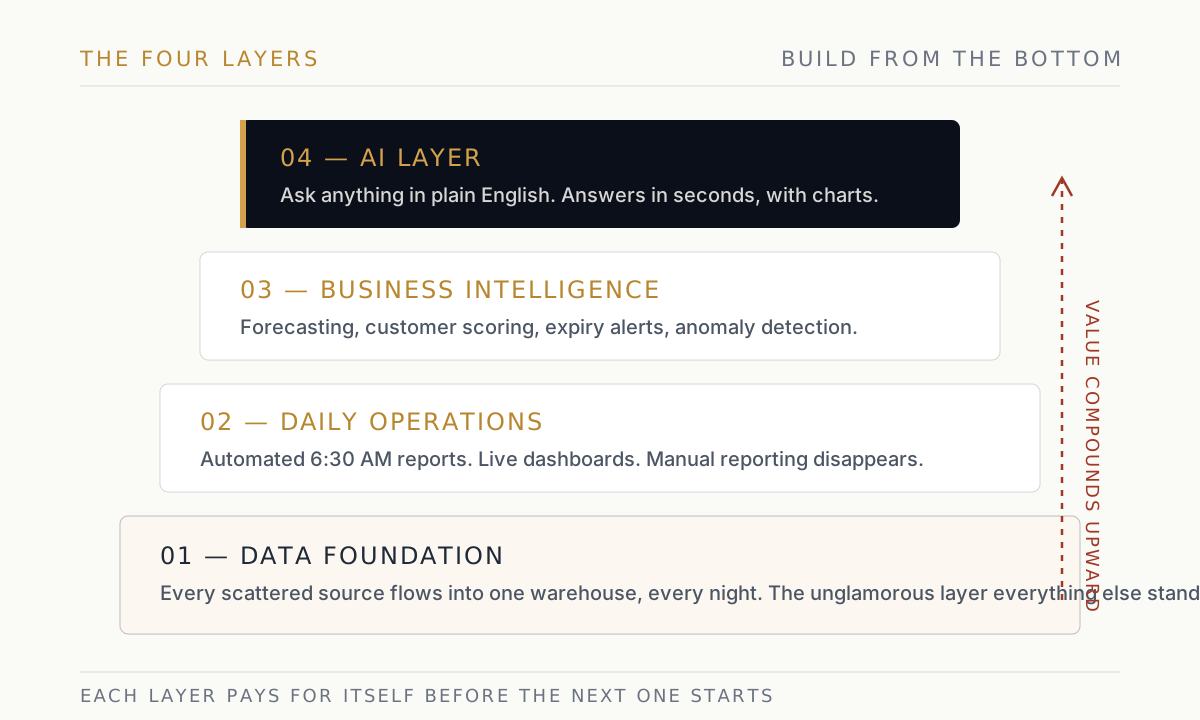
Here’s my honest opinion after building these systems: everyone wants layer 4, and almost nobody wants to pay for layer 1. The AI assistant is the demo that gets people excited; the data warehouse is the invoice that makes them wince. But an AI assistant sitting on messy, scattered, contradictory data doesn’t give you intelligence — it gives you confident nonsense, faster than ever. If a vendor offers you the chatbot without asking hard questions about where your data lives and what condition it’s in, walk away. The order of the layers isn’t a preference. It’s physics.
My favourite part: the 80% solution
The kiosks were the hardest problem. The host supermarkets run the POS and report once a month — there’s no magic API that gives you someone else’s till data. A vendor selling certainty would have promised one anyway.
Instead, the design layers four imperfect sources: the monthly settlements (the authoritative truth), a two-minute mobile form merchandisers fill during kiosk visits, inventory inference (stock delivered minus stock observed ≈ stock sold), and — where commercial leverage allows — direct data feeds negotiated with the bigger hosts. None of these is perfect. In combination they reach roughly 80% of true daily visibility at a fraction of the cost, and the month-end settlement reconciles the model tighter every cycle. Within a few months, daily estimates land within 2–3% of official numbers.
That’s what real-world data engineering looks like: not pretending the perfect feed exists, but stacking honest approximations until the picture is clear enough to act on — 30 days earlier than before.
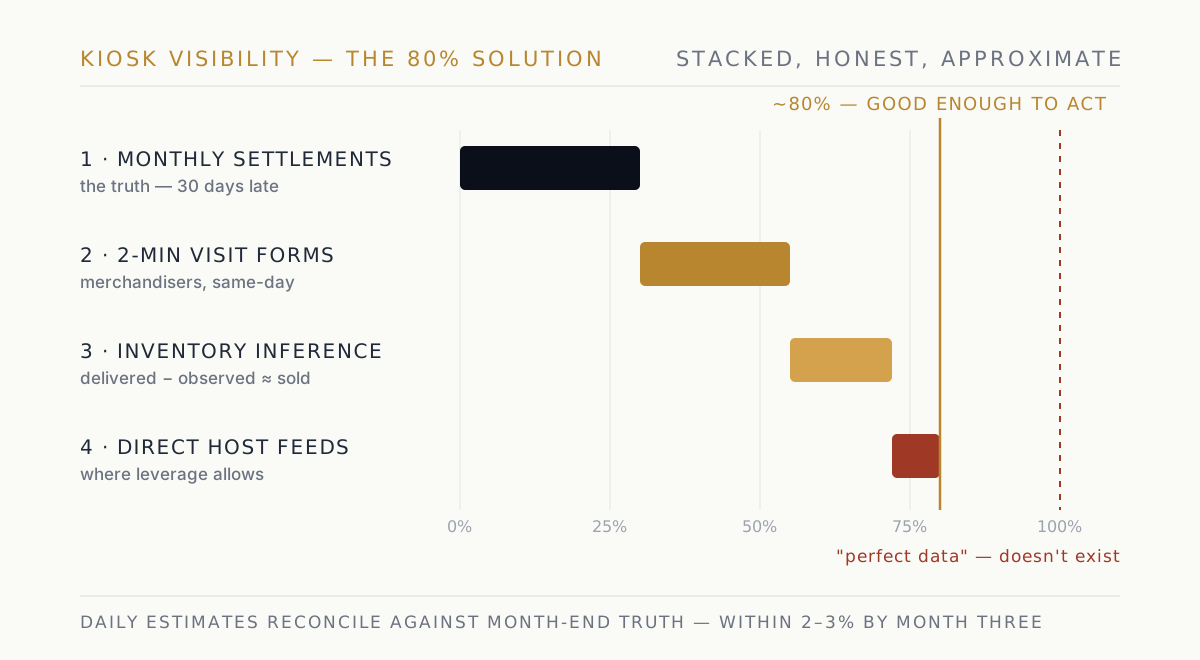
I think this is the most transferable idea in the whole project. Most data projects die at exactly this point — someone declares the data “incomplete,” the project waits for a perfect integration that never comes, and a year later nothing has shipped. The 80% answer you have today beats the 100% answer you’ll never have. Decide at 80%, and let every month-end reconciliation make the model sharper.
Customers stop being treated identically
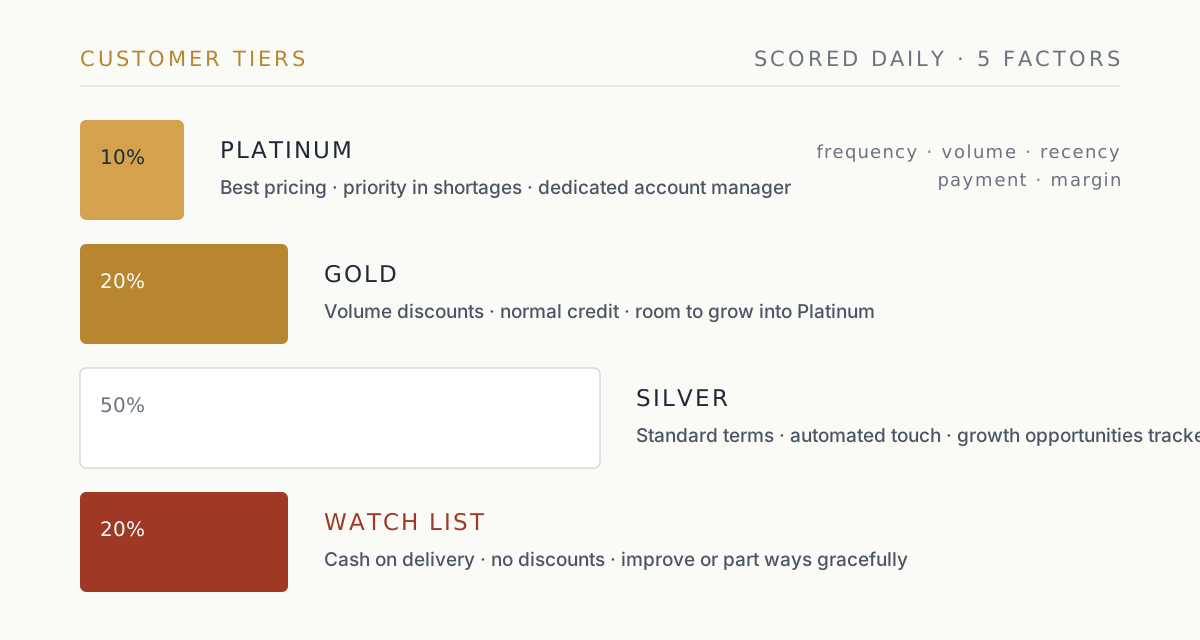
The other strategic piece: every trading customer gets scored automatically — frequency, volume, recency, payment behaviour, margin contribution — and tiered. The restaurant that orders AED 18,000 twice a week and pays cash on delivery stops getting the same terms as the café that orders erratically and pays sixty days late. Discounts flow to customers who earn them. Credit limits adjust to actual behaviour. When a top customer’s order rhythm slips, the system flags it within days — not after they’ve already moved to a competitor.
What the owner actually gets
Stripped of technology language: less stock written off to expiry (food businesses typically lose 4–8% of inventory value to waste — this attacks that directly). Inventory holding down 15–20% through demand forecasting, with fewer stockouts. Cash reconciled by 7 AM daily instead of variances surfacing weeks late. True profitability per location, not just topline revenue. And the thing nobody puts in proposals but everyone feels: you sleep better, because the constant low-level anxiety about what you can’t see gets replaced by a system that tells you when something needs you.
What I think most businesses get wrong about AI
Three opinions, earned the practical way:
They buy tools, not outcomes. A ChatGPT subscription for the office is not an AI strategy. The question isn’t “which AI should we use?” — it’s “which decision are we currently making late, blind, or by gut, and what would it take to make it early, informed, and automatic?” Start from the decision and work backwards.
They equate AI with chat. Look back at that 6:30 AM WhatsApp message — the single highest-value feature in this entire design. There’s no chat in it. Nobody asks it anything. It’s the system deciding what you need to know and telling you before you ask. The plain-English assistant is genuinely useful, but it’s the dessert. Proactive intelligence is the meal.
They start where the demo sparkles instead of where the money leaks. Expiring stock, silent cash variances, customers drifting away unnoticed — these are unglamorous, measurable, and they bleed money every single day. Fix those first. The flashy stuff earns its place faster when it’s standing on saved dirhams.
”But I’m not a food trader”
Swap the nouns and the blueprint holds:
- Clinics or salons: kiosks → branches; expiry alerts → no-show and rebooking patterns; settlement lag → insurance claim cycles.
- Real estate: locations → portfolios; expiry → lease renewals nobody chased; customer tiers → tenant and landlord scoring.
- Trading and distribution of any kind: the model maps almost one-to-one.
- Services firms: demand forecasting → utilisation forecasting; waste tracking → unbilled hours.
The pattern is always the same: your business already produces the data. It’s just not being read back to you. The four layers — foundation, daily operations, intelligence, AI — don’t care what industry the data came from.
One UAE-specific note: mandatory e-invoicing (PINT-AE) is rolling out now, with ASP appointment deadlines in mid-2026 and B2B go-live on 1 January 2027. If you’re going to touch your data systems anyway for compliance, that’s exactly the moment to build the intelligence layer alongside it — one coordinated programme instead of two fire-drills.
This is the kind of work I do at Forzateks — phased, no big-bang implementations, each stage delivering value before you commit to the next. If any paragraph above described your Tuesday morning, let’s talk. The first conversation costs nothing and usually makes the path obvious within an hour.